Colorado Kitchen Cabinet Costs: What Changes the Budget Beyond Door Style

Kitchen cabinets are one of the biggest investments in a kitchen remodel, but their cost depends on much more than the door style you choose. From cabinet construction and storage features to finishes, hardware, and layout changes, several decisions can influence your overall budget.
Understanding these factors can help you prioritize what's important, compare options, and make informed decisions throughout your renovation. Whether you're updating an existing kitchen or planning a complete redesign, knowing what affects cabinet costs can help you create a realistic budget.
For a closer look at pricing, explore our guide to the cost of kitchen cabinets in Colorado.
What Are the Different Types of Kitchen Cabinets?
Kitchen cabinets generally fall into three categories: stock, semi-custom, and custom. Each offers different levels of flexibility, design options, and potential costs.
- Stock cabinets: Manufactured in standard sizes with limited customization options. They generally have shorter lead times and can be a practical choice for straightforward kitchen layouts.
- Semi-custom cabinets: Offer more flexibility in dimensions, finishes, and storage features while using established cabinet construction options.
- Custom cabinets: Built to specific measurements and design requirements, offering greater flexibility for unusual layouts or personalized storage solutions.
These categories vary by manufacturer, so compare specific cabinet lines rather than assuming every product within a category offers the same quality.
For a closer comparison, explore our guide to custom vs. semi-custom cabinets.
How Does Your Kitchen Layout Affect Cabinet Costs?
Your kitchen layout influences the number, size, and configuration of cabinets needed. Keeping the existing layout may reduce some remodeling expenses, while changing the kitchen's footprint can introduce additional work.
Adding an island, expanding pantry storage, or installing cabinets around architectural features may increase the number of cabinet boxes, panels, and specialized components required.
Layout changes can also affect other parts of the renovation. Moving a sink, range, or refrigerator may require plumbing, electrical, or ventilation adjustments. Cabinet dimensions also influence countertop measurements, backsplash placement, and flooring details.
For more information, explore our guide on keeping your kitchen layout or reconfiguring it.
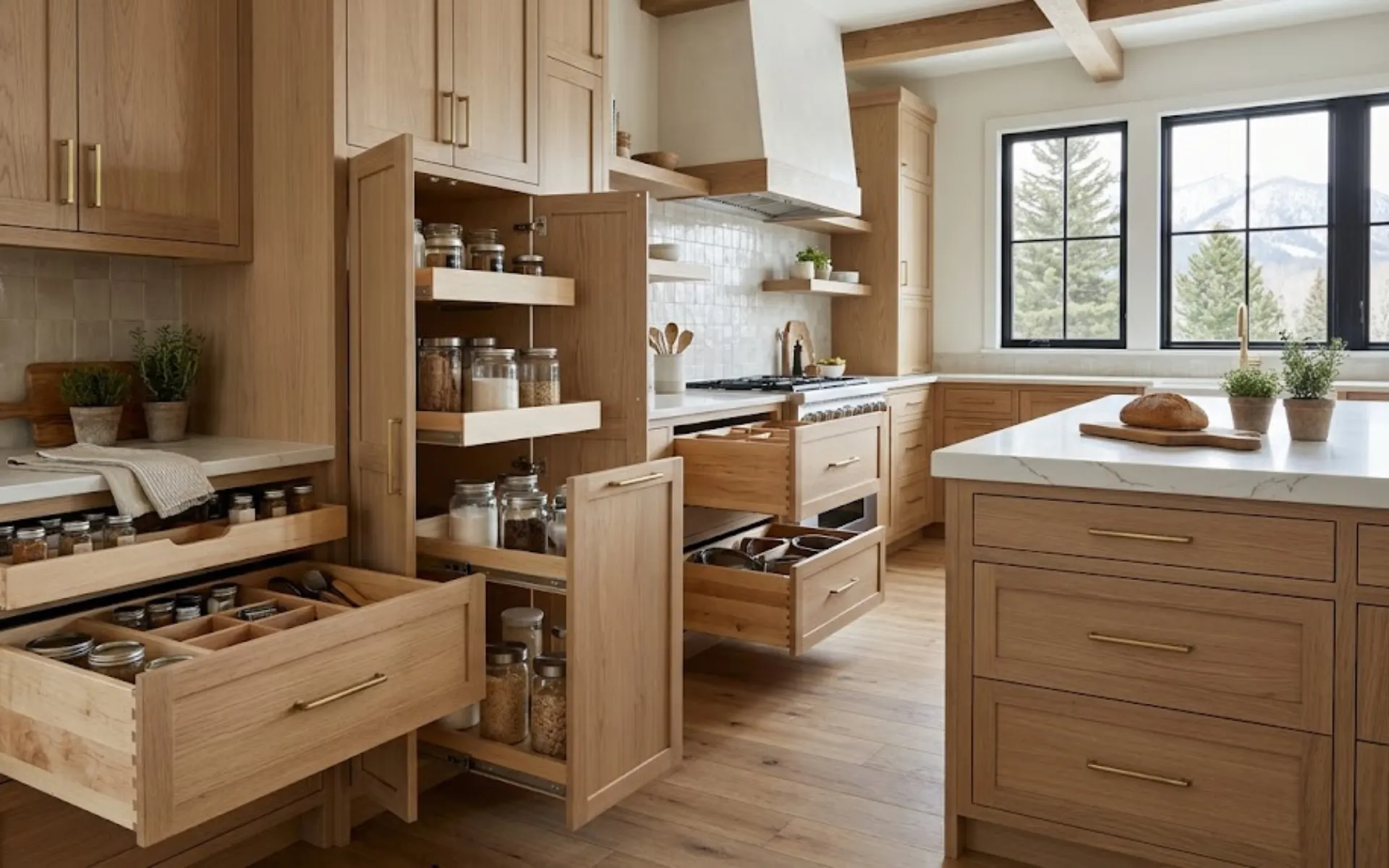
Which Kitchen Cabinet Storage Features Affect the Budget?
Storage upgrades can improve everyday functionality, but they also contribute to the overall cabinet budget.
Popular features include pull-out shelves, deep drawers, built-in trash and recycling centers, spice organizers, and pantry storage systems.
These additions can make frequently used items easier to reach and help reduce clutter. However, not every kitchen needs every available feature.
Consider what frustrates you about your current kitchen and prioritize storage solutions that address those problems. A well-planned drawer system or pull-out pantry may provide more daily value than decorative upgrades you rarely use.
How Do Cabinet Finishes and Hardware Affect Costs?
Cabinet finishes and hardware influence both appearance and price. Painted, stained, and specialty finishes involve different manufacturing processes and maintenance considerations.
Decorative handles, knobs, soft-close mechanisms, and upgraded drawer construction can also increase costs, especially when repeated throughout the kitchen.
Think about how your household uses the space when selecting finishes. Kitchens with frequent cooking, children, or pets may benefit from surfaces that are easier to clean and maintain.
Review manufacturer recommendations and product specifications to understand how different finishes and hardware options perform over time.
Why Should You Choose Appliances Before Finalizing Cabinets?
Appliance dimensions play an important role in cabinet planning. Refrigerators, ovens, range hoods, and microwave drawers can all influence cabinet sizes and surrounding storage configurations.
Panel-ready appliances and built-in designs may require more specialized cabinetry.
Selecting appliances before finalizing cabinet measurements helps prevent unexpected changes during installation. Confirm appliance specifications with your designer before cabinets are ordered.
How Do Cabinet Lead Times Affect Your Kitchen Remodel?
Cabinet lead times vary depending on the manufacturer, construction type, finishes, and customization requirements.
Because cabinets are installed before several finishing elements, delivery delays can affect countertop installation and other stages of the remodel.
Ask your builder about current ordering and delivery expectations, and confirm when cabinet selections need to be finalized to stay on schedule.
How Can You Prioritize Your Kitchen Cabinet Budget?
Creating a realistic cabinet budget means understanding where your money will have the greatest impact.
Consider investing in features you use daily, such as quality drawer hardware, functional storage, and cabinet configurations that improve the kitchen's layout. Decorative details and less frequently used upgrades may offer opportunities to adjust costs.
It's also important to understand cabinet allowances. An allowance is a budgeted amount included in a remodeling proposal for materials or products that haven't been finalized.
Before approving a proposal, ask:
- What does the cabinet allowance include?
- Are hardware, storage accessories, and installation included?
- What happens if your selected cabinets exceed the allowance?
- Are there alternative options that better fit your budget?
Understanding these details can help prevent unexpected expenses as selections are finalized.
For additional guidance, explore our article on comparing kitchen remodel proposals in Denver.
What Should Be Included in a Written Cabinet Proposal?
A detailed cabinet proposal should clearly outline the materials, construction type, finishes, hardware, storage features, and installation services included in the project.
It should also identify exclusions, allowances, and estimated lead times so you understand what you're paying for.
When comparing proposals from different contractors, make sure they're based on similar specifications. A lower price may reflect different construction materials, fewer storage features, or additional expenses that aren't included.
Request clarification whenever details are unclear, and confirm important selections and expectations in writing before work begins.
Plan Your Colorado Kitchen Cabinet Budget With Confidence
Kitchen cabinet costs depend on more than appearance. From construction and storage features to finishes, hardware, and layout decisions, each choice contributes to your overall remodeling budget. Understanding these factors can help you prioritize what matters most and create a kitchen that balances style, functionality, and long-term value.
At VL Builders, we help Colorado homeowners navigate kitchen remodeling decisions with thoughtful planning and design guidance. Whether you're updating your cabinetry or planning a complete kitchen renovation, our team can help you explore options that fit your space, lifestyle, and budget. Contact VL Builders to discuss your upcoming kitchen remodel.
Browse and download our free guides and reports.


Recognized & Certified